Creativity is not a department
A study in language for leaders at all levels
As AI capabilities and automation increase, human creativity is a key asset, and industry leaders around the world know this.
The World Economic Forum’s The Future of Jobs Report 2025 notes, “AI and big data top the list of fastest-growing skills, followed closely by networks and cybersecurity as well as technology literacy. Complementing these technology-related skills, creative thinking, resilience, flexibility and agility, along with curiosity and lifelong learning, are also expected to continue to rise in importance over the 2025-2030 period.” (World Economic Forum, 2025). A creativity-driven workplace culture is serious business and could mean the difference between survival and obscurity in an environment characterized by constant change.
I direct the Creativity Core Curriculum at Thomas Jefferson University, which exists to build creative confidence and a flexible mindset across all disciplines. In this role, I’ve learned much about how people in different industries regard creativity, and the attitudes can be surprising and polarized. For some, especially those in art and design disciplines, creativity is essential to their identity. They may even be protective of the term—wanting exclusive ownership of creativity and touting it as the superpower of their discipline. At the other end of the spectrum, creativity may seem a foreign concept with individuals perhaps expressing some curiosity about it but finding it a fluffy, nice-to-have thing or worse, irrelevant.
This wide spectrum of beliefs raises an important question about how we position creativity—and what becomes possible when we treat it as essential rather than optional.
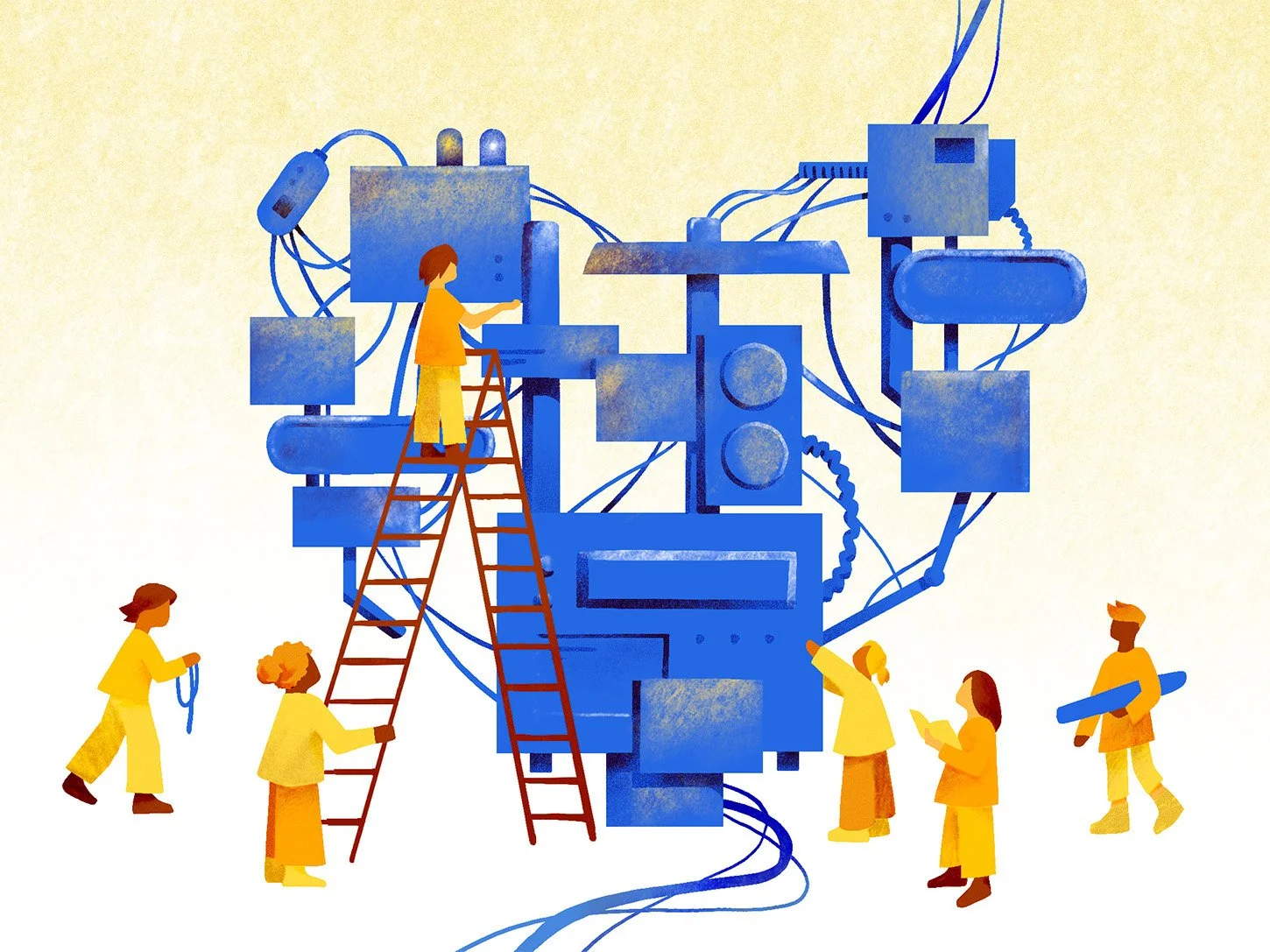
Creativity thrives when it’s built collectively—across roles, perspectives, and disciplines.
What if creativity wasn’t treated as a luxury or a side project, but as key infrastructure? Here are three actionable tips to help you pursue this path that involve reframing language.
Tip one:
Don’t use the term “creative department.”
Language shapes how people understand their role and what they believe is expected of them. Creativity isn’t the domain of a single team—it’s the practice of bringing together what is new with that which has value in a given context. This is work that belongs to everyone. Creativity is required to achieve innovation and is essential to building transformative, industry-leading practices over time.
When organizations treat creativity as a shared responsibility, they create space for curiosity, experimentation, and more unique results. Moving away from the language of a “creative department” helps signal that everyone has a role to play in shaping new ideas and solutions.
Tip two:
Embrace teachable “mistakes.”
Innovation and creativity require experimentation—and experimentation requires encountering and learning from responsible mistakes.
I’m not referring to errors that result from carelessness, though those can offer lessons—just ask Alexander Fleming, whose discovery of penicillin occurred following an unintended fungal contamination. Instead, I’m talking about the experiments that didn’t quite work as intended but revealed new information that can guide future direction.
Psychiatrists Kellerman and Seligman describe one form of creativity as figure-ground reversal or “…shifting focus from the primary subject (foreground) to the overlooked context or background to uncover crucial insights” (Kellerman & Seligman, 2023). They point to the pivot from using GPS to track elements in space to instead track elements on earth as an example. This kind of reframing reflects what many call the “happy accident”—an unintended result that, when viewed in a new light, may have greater merit than the original plan.
Creating space for this form of reflection requires leaders to establish a climate of psychological safety around error reporting. A greater willingness to report mistakes has been associated with comparatively higher performing teams, a dynamic studied in healthcare, where transparency is essential for quality improvement (Munn et al., 2023).
Mission-driven institutions like healthcare organizations exist to steward what matters most. They operate under scrutiny, carry enormous responsibility, and often work in environments that leave little room for experimentation. Yet the challenges they face are complex, systemic, and ever evolving. These problems cannot be solved with static protocol or isolated innovation labs. Examining mistakes through the lens of curiosity can illuminate new possibilities.
Tip three:
Focus on possibilities with "What if...?"
Some leaders only want presentations of highly polished ideas. Others make time to imagine with their teams, asking questions like “What if…,” “How might we…,” or “In what ways could we…?” Modeling curiosity in this way inspires resourcefulness, critical thinking, and a sense of play. It signals that questioning assumptions, including rules and biases, is not only acceptable but encouraged.
Dreaming together also empowers idea-sharing that transcends hierarchical roles and experience, demonstrating that insight can come from unexpected places. When leaders make space for a diversity of perspectives, they expand what feels possible and move beyond established protocols.
Over time, creativity becomes a shared, practiced capability—one where colleagues demonstrate the confidence to boldly reframe problems, test new approaches, and learn in public.
Creative infrastructure is not built with a single workshop or side initiative. It takes practice and demands a cultural shift.
The words we use in the workplace signal what is valued, what we believe, and what is possible. When we dissolve the boundary of a single creative department, redefine mistakes as data, and treat curiosity as a strategic starting point rather than a detour, we begin to embed creativity into the daily operating system of an institution.
In a world of rapid change, the organizations that endure will instill creative confidence widely and practice it deliberately across roles and hierarchies, equipping people to shape the future they want to work in.
World Economic Forum. (2025). The Future of Jobs Report 2025: Digest. https://www.weforum.org/publications/the-future-of-jobs-report-2025/digest/
Kellerman, G. R., & Seligman, M. E. P. (2023). Cultivating the four kinds of creativity. Harvard Business Review. Retrieved from https://hbr.org/2023/01/cultivating-the-four-kinds-of-creativity
Munn, L. T., Lynn, M. R., Knafl, G. J., Willis, T. S., & Jones, C. B. (2023). A study of error reporting by nurses: The significant impact of nursing team dynamics.Journal of Research in Nursing, 28(5), 354–364. https://doi.org/10.1177/17449871231194180
Illustration by Spring 2026 intern, Haimeng Ge.