Spring 2026 interns
Learning and contributing in service of the public
This season, we’re welcoming emerging designers, writers, and researchers who are exploring what it means to contribute meaningfully to public life.
We’ve opened our doors to a small group of contract interns who are curious about public service—not as an abstraction, but as a lived, ethical practice. The Spring 2026 cohort joins us at a moment when public institutions face deep challenges, alongside real opportunities for renewal.
In their own words below, each intern introduces themselves and shares what motivates their interest in public service. Their reflections remind us that the future of civic work depends not only on expertise, but on care, accountability, and a willingness to engage in complexity head-on.
Yadu Mangray
School of the Art Institute of Chicago (SAIC) —
Chicago
What draws you to public service
I’ve always had a passion for bettering the community, and that starts at a public policy level. I’m someone who believes informing and educating is one of the strongest methods of change. Being able to incorporate that into my work is something I strive for and always look for opportunities to do.
What you’re hoping to learn or practice this Spring
I’m hoping to learn and practice working with a team to build meaningful design that helps communities—and to expand my circle of designers and writers.
Something else about you
I love to cook—it’s my second passion next to design. If I wasn’t a designer, I’d probably be trying to become a chef. Here are a few dishes I made.
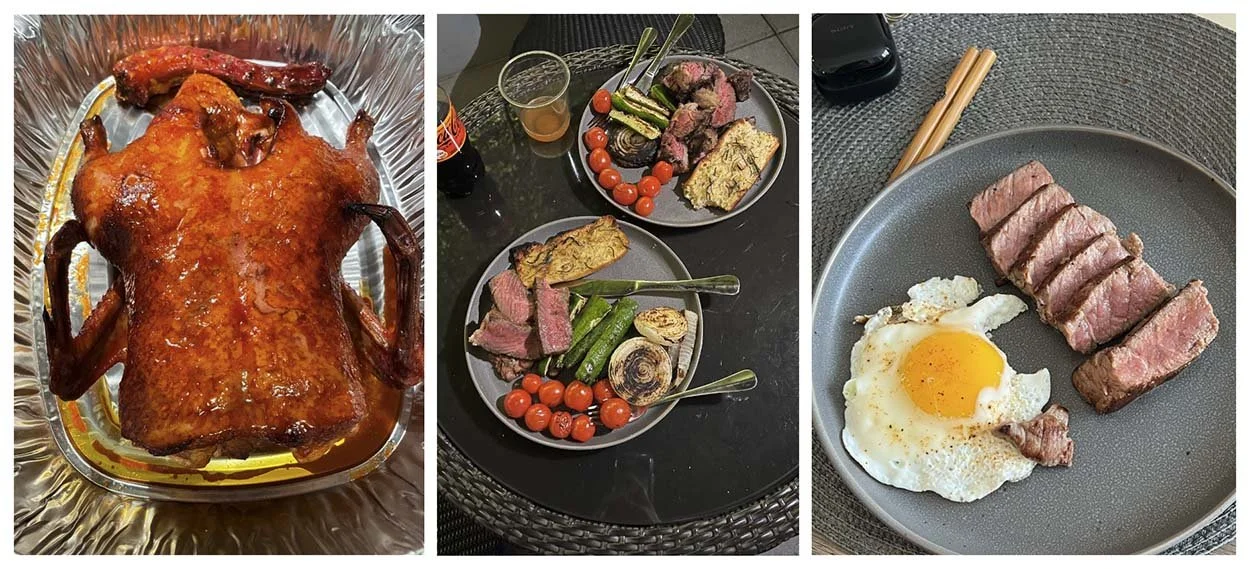
Yadu’s second passion outside of design: cooking. From roasted and smoked duck to ribeye with grilled vegetables and a Brazilian-style New York strip with a sunny-side-up egg, the kitchen is another place where craft and care come together.
Haimeng Ge
Rhode Island School of Design (RISD) ’25 —
Providence, Rhode Island
What draws you to public service
I am drawn to public service because I want to contribute to organizations that place public interest at the center of their work. For me, combining public service and illustration is largely about using art as a storytelling tool, making work that brings complex and abstract issues or messages closer to the intended audience.
What you’re hoping to learn or practice this Spring
I hope to learn more about the role creativity plays in building systems to uplift people, and practice visual storytelling skills to convey information with both precision and warmth.
Something else about you
Here’s our cat Moto sitting in a box.
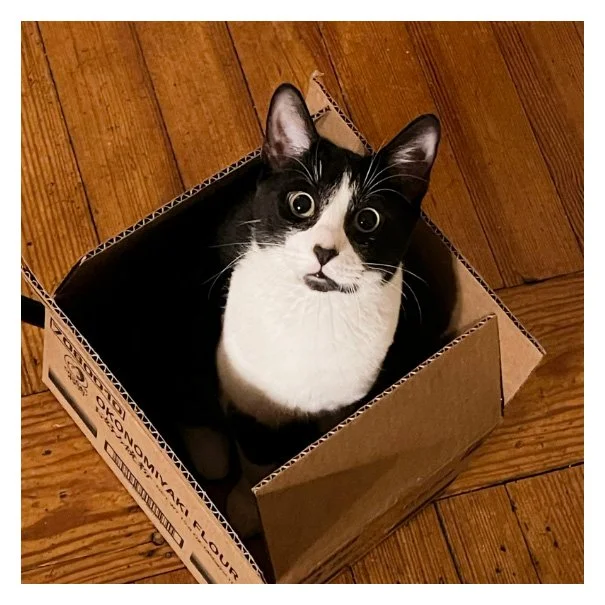
A reminder that curiosity often finds its own container.
Mashal Zahra
Maryland Institute College of Art (MICA), MA Social Design — Baltimore, Maryland • Originally from Pakistan
What draws you to public service
I am drawn to public service because I want to keep contributing to people, places and spaces. Many public-facing processes can feel confusing and distant, and I am motivated by work that makes them more accessible and human.
What you’re hoping to learn or practice this Spring
This spring, I am hoping to practice translating complex ideas into an accessible visual and narrative format, using research and storytelling. I’m also excited to learn how creative projects are shaped in a real-world public-interest context.
Something else about you
I have a bit of an over-curious brain, and I often find myself wondering where materials go after we use them. This is just a 5 min thought web of a bread tag.
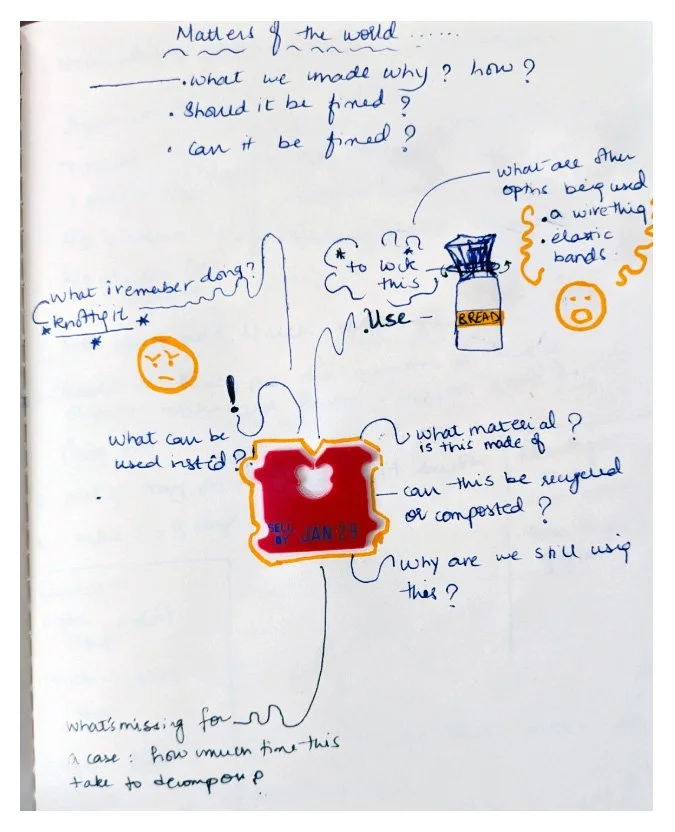
How one bread tag becomes a map of bigger environmental and design questions.
Andi Gunther
Pratt Institute, BFA in Creative Writing —
Brooklyn / Berlin • Originally from Washington, DC.
What draws you to public service
Public service is something I believe to be largely misunderstood, not to the fault of those who have misconceptions about it. It is meant to serve the people, yet often what is visible are institutions supporting those already in power or those who already benefit most from existing structures.
By “the people,” I mean citizens, community leaders, working families, and those who fall into marginalized categories. Even when policy is designed for the communities it intends to serve, it can be illegible or inaccessible to those without the resources to understand or implement it.
Being from Washington, DC., has also put me in particular proximity to public service and made me curious about its inner workings, particularly how it can be of service rather than, at times, federal complacency.
Language is central to outreach and connection. It bridges gaps within communities and across them. I primarily identify as a writer—in practice and purpose—and I hope to use my voice to help translate the message Public Servants offers across forms: technical writing, digital spaces, editing with public-oriented language in mind. Fostering and furthering community is an intimate and necessary practice; one I am drawn to.
What you’re hoping to learn or practice this Spring
This Spring, I’m hoping to explore language in a new context. While I’ve practiced writing professionally and personally in many forms, adapting it specifically for civic spaces is a newer endeavor.
Storytelling in organizations is often taught with advertising in mind—selling a product rather than prioritizing the people it reaches. I’m excited to learn how to write in ways that remain relatable and coherent while holding social and political stewardship in view—making information comprehensible to people with different levels of access to learning and experience.
My literary practice—primarily poetry—benefits from practicing more technical and logistical writing. Translating the abstract is something I’ve worked on at Pratt, but grounding it for implementation, while preserving its human sensibility, is a skill I hope to grow. It’s exciting to learn in a space that does not treat people as products, but as beings who can be served and uplifted.
Something else about you
Every week since last February, I’ve practiced aerial yoga and recently begun learning aerial silks. I love seeing tangible progress in my strength and mobility—it brings back that childlike wonder and play I often find absent in a city as busy as New York.
When I’m not writing or flipping in the air, you can find me reading, biking, figure drawing, decorating my apartment, and organizing literary events. I also run a feminist poetry collective, Winterfat Presse, which hosts a reading series and print magazine honoring dissident poets and building an active archive of literary resistance.
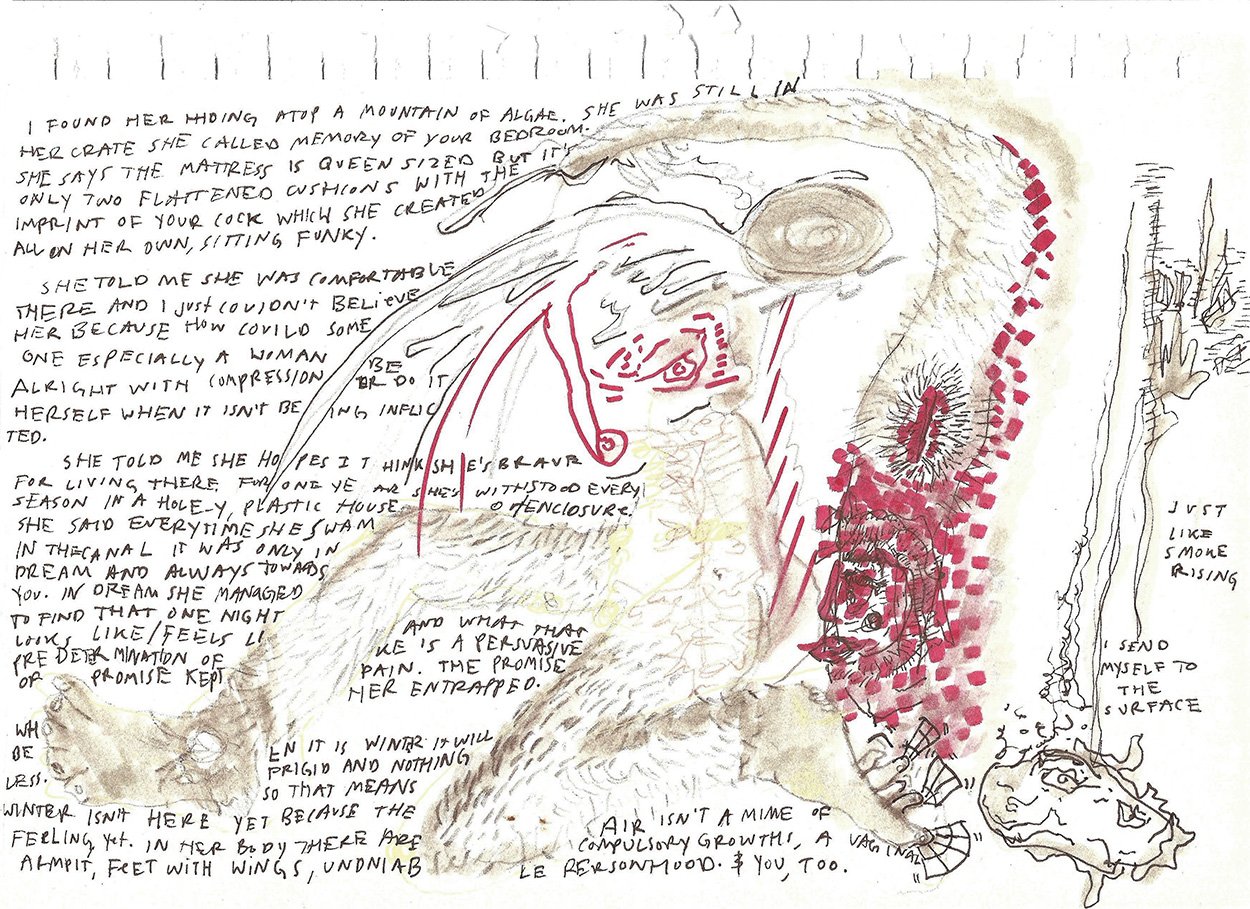
Rising Like Smoke—a mixed-media piece layering text, gesture, and abstraction.
Alyssa Ross
University of Maryland (UMD) ‘25 — Maryland
What draws you to public service
I’m drawn to public service because I love using design as a way to help people engage with information in ways that feel approachable and accessible. I always think about the audience first—what their journey is, and how they experience what they interact with.
Public service allows me to create work that can support real communities and ensures important messages reach people clearly. I’m excited to continue growing my skills while creating designs that genuinely serve to inform others!
What you’re hoping to learn or practice this Spring
I hope to grow my design skills within a public-service setting while collaborating with fellow interns and learning from industry professionals. I’m excited to gain new perspectives and better understand how creative work can support community engagement and meaningful public outreach.
Something else about you
I come from a fine arts background—primarily acrylic paintings—before transitioning into design. I still love to doodle and make silly booklets when I can.
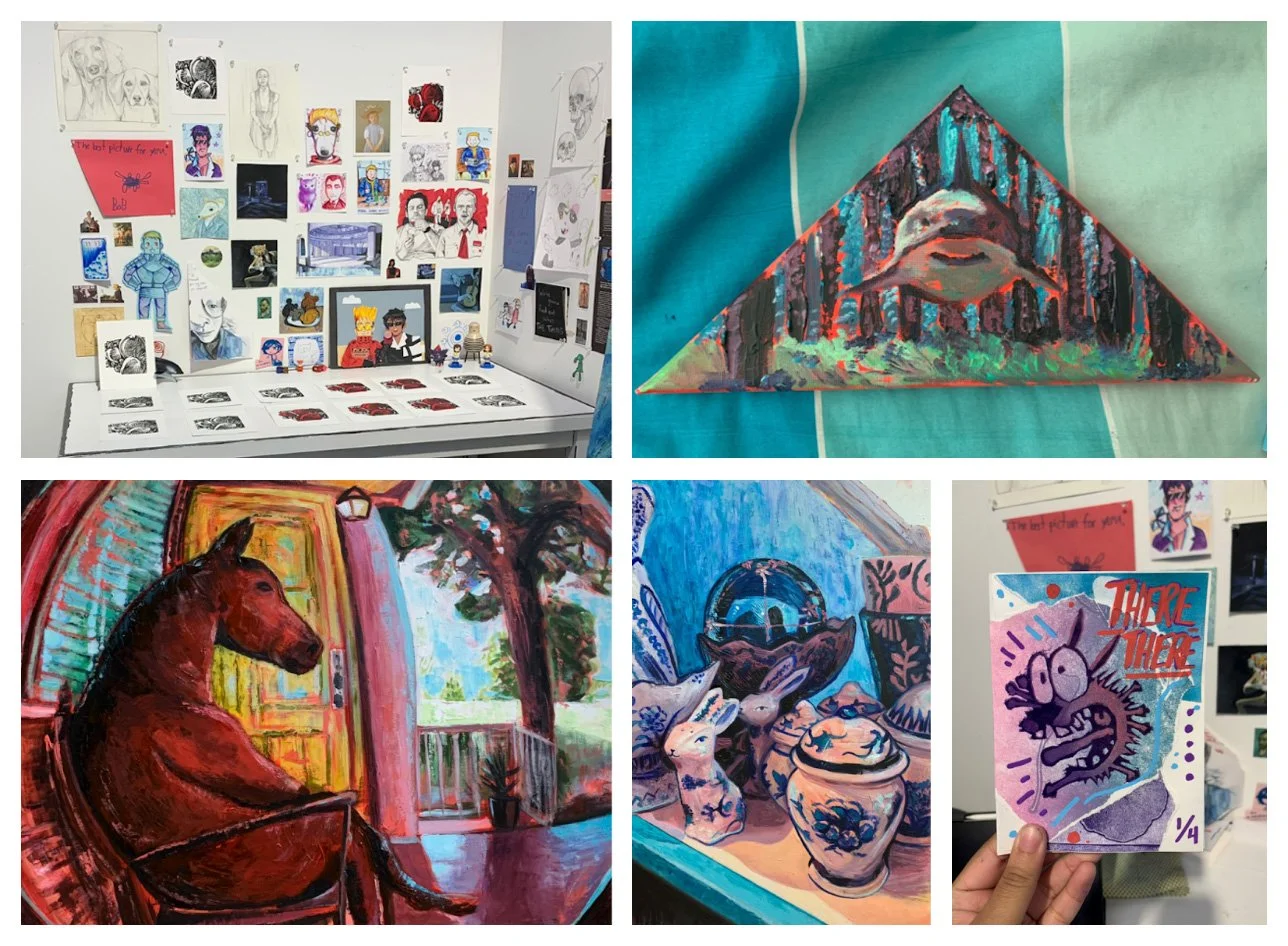
A selection of paintings, studio work, and playful self-published pieces from Alyssa’s fine arts practice.
Public service is never the work of one person or one organization. It’s built through many hands, perspectives, and through a shared commitment to doing better over time. Contact us to discuss collaboration.
We’re grateful to spend this season learning alongside this group, and we’re excited to see how their questions, ideas, and values shape the future of public-interest, and creative, work.