
In Service: Notes from the Field
Tactical insights and thoughtful dispatches from inside the work.
Explore by topic
We write regularly about the ideas, tools, and practices shaping better public systems. View all blog posts or browse posts by theme to dig into the topics that matter most to you.

Fall internship applications now open
Public Servants’ Fall 2026 creative and civic practice internship is a paid, part-time, remote contract role offering space for early-career creatives to contribute to real projects in design, storytelling, and public-interest work. Applications are open.

The readiness challenge
Organizations often focus on whether systems are ready to launch. But readiness can mean something larger: understanding the people who will have to live with what we create. This essay explores innovation, human experience, and why the questions we ask early shape the systems people eventually rely on.

What is accessibility?
Accessibility is the practice of ensuring people can meaningfully access, understand, navigate, and participate in environments, services, programs, products, and communications. In public-interest work, accessibility extends beyond websites and compliance—it shapes whether people can fully participate in public life.

Organizational drift
Organizations rarely drift all at once. More often, teams gradually begin operating from different assumptions about priorities, ownership, coordination, and what success looks like. Over time, that misalignment shapes not only internal operations, but also how the public experiences the institution itself.

When service design breaks down
Public services rarely fail all at once. More often, they show signs of strain across operations and experience. This post outlines practical signals that service design may be breaking down, and why that matters for access, trust, and outcomes.

What is a city or town council?
City and town councils play a central role in how communities function—from passing local laws to deciding how public funds are spent. This overview explains what councils do, how they’re structured, and how they work with mayors and managers to shape public services.
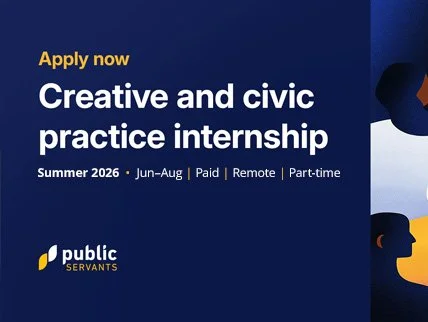
Summer creative and civic practice internship
Public Servants’ Summer 2026 creative and civic practice internship is a paid, part-time, remote contract role offering space for early-career creatives to contribute to real projects in design, storytelling, and public-interest work. Applications are open.

What is a mayor
Mayors are among the most visible leaders in American local government, expected to set direction, respond in moments of crisis, and represent their communities. Understanding the role of a mayor helps clarify how leadership, operations, and public trust intersect in U.S. local government.

Public data restraint
In public service, more data often promises more insight. But responsible leadership requires knowing when not to collect certain information at all. This essay explores data restraint, informed consent, and the governance decisions that shape public trust over time.

Explore the Civic Glossary
Making public service easier to understand—one concept at a time.
Government and public service rely on ideas, systems, and terminology that aren't always easy to navigate. The Civic Glossary explains the concepts that shape public life through clear, accessible articles grounded in history, practice, and real-world examples.
Collaborate
Explore what’s possible with the right expertise.