Reflections on serving the public across political change
In moments of democratic strain, institutions are often judged by what they say—statements issued, values named, positions clarified.
But the public experiences democracy less through declarations and more through contact: the systems they must navigate, the spaces they enter, the tone they encounter, and the way they are treated when they are vulnerable, frustrated, or seeking help.
Trust is built—or broken—through lived experience, not stated intent. And the gap between institutional power and public experience is where trust is either reinforced or actively undermined.
The reflections below draw from recent conversations with public servants who have worked inside the White House across administrations, as well as from our work with government and nonprofit organizations navigating similar tensions every day. While the contexts differ, the obligations remain strikingly consistent.
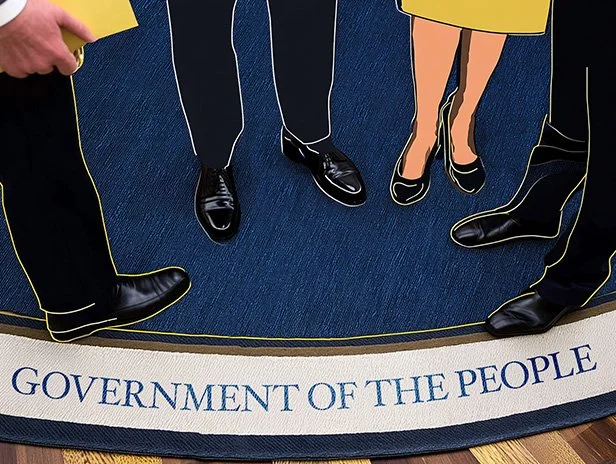
Democratic institutions endure through the people entrusted to serve within them.
1. Care for people, especially in moments of vulnerability
Democratic institutions serve people—often at moments of grief, anger, fear, or uncertainty.
Care is often spoken about in abstract terms. In practice, it is operational. And it shows up most clearly when nothing can be made right.
One former White House leader described her responsibility during moments of national grief: welcoming families who had lost children to violence; creating space for anger, breakdown, and silence; ensuring privacy from the press; paying close attention to details others might dismiss—lighting, water, seating, walking paths—because those details communicated something essential: you are welcome here, and you will be treated with dignity.
She was clear-eyed about the limits of her role. She could not undo harm or restore what was lost. But she could refuse to compound it. That refusal—expressed through restraint, preparation, and care—became a form of public service in its own right.
For public servants, this lesson travels far beyond ceremonial spaces. Whether designing a benefits intake flow, hosting a public meeting, or responding to a community in crisis, care is not a tone to strike after the fact. It is a set of decisions made in advance, often under constraint, that shape whether people feel respected or managed.
Care is not a soft value. It is the condition that makes public institutions worthy of trust.
2. Continuity beyond any single tenure
Public institutions outlast the people who serve them. That is both their strength and their burden.
Another thread that surfaced repeatedly was continuity—specifically, the obligation to design and lead beyond one’s own time in office.
A former digital leader described approaching WhiteHouse.gov not as a communications asset, but as civic infrastructure. Its purpose, he said, was threefold: to provide accurate, timely information to the public; to serve as a record of policies as they evolved over time; and to function as a resource for students, teachers, researchers, and people around the world whose first exposure to the presidency would be through that site.
When asked who he felt accountable to, his answer was simple: the American citizen first. He recalled early guidance that reinforced the same principle—don’t worry about polls; do the right thing.
That ethic shaped decisions that were rarely visible: documentation that future administrations could inherit, standards that resisted politicization, and user experience improvements meant to encourage people to return rather than disengage. The goal was not perfection, but progress that could be built upon.
Continuity, in this sense, is not resistance to change. It is care extended across time.
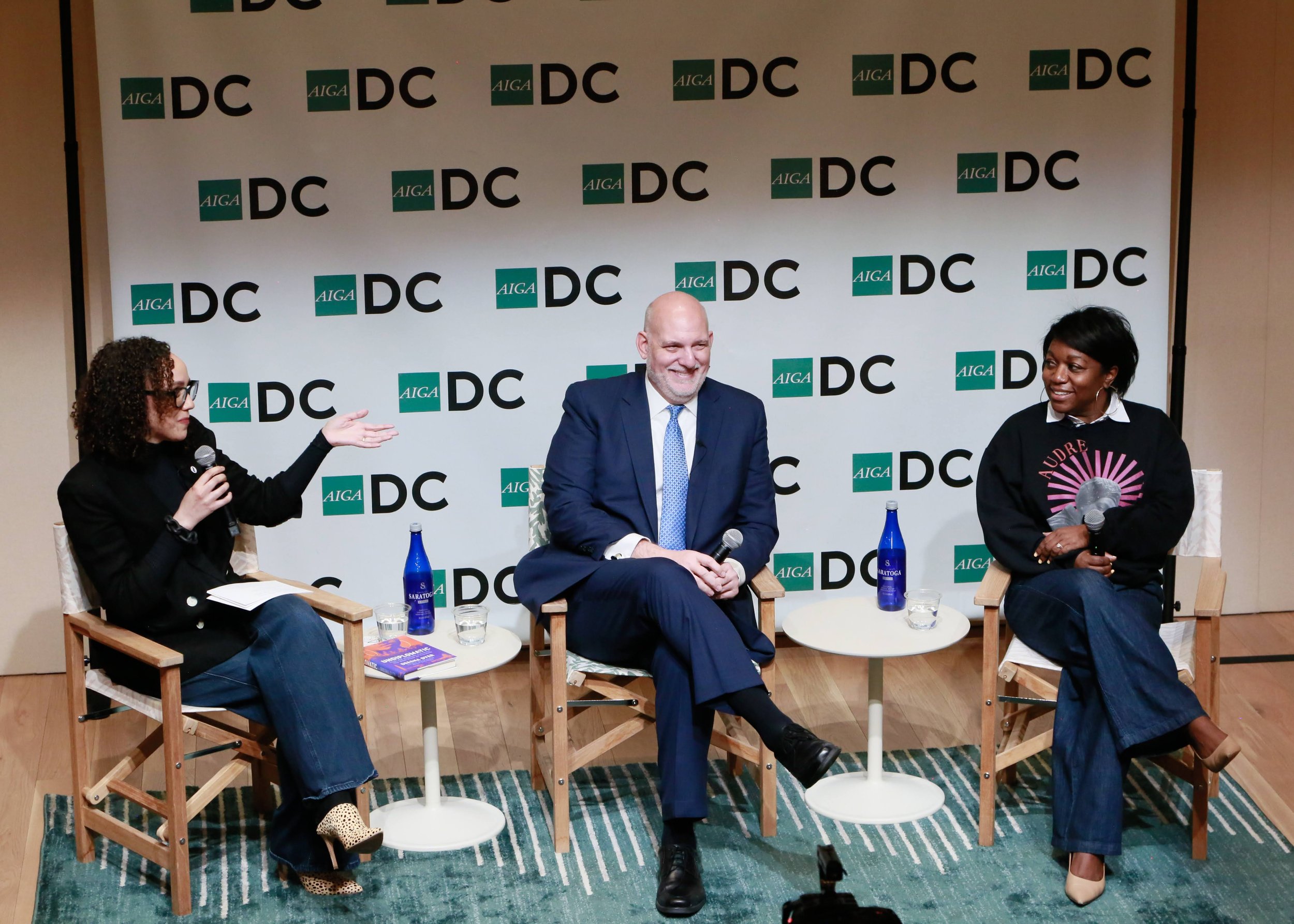
A public conversation on stewardship, access, and institutional responsibility, hosted by AIGA DC. (Image courtesy of AIGA DC)
3. Tradition and tone as forms of governance
Tradition is often misunderstood as rigidity. In practice, it functions more like a strong foundation.
One public servant spoke candidly about arriving in a role where tradition was not her strength—and choosing to learn rather than dismiss it. She leaned on past leaders across administrations, studied documentation, and treated tradition as a foundation that could be adapted rather than discarded.
That approach made change legible and legitimate. When hosting religious leaders, for example, she honored past precedents while updating expression—moving from opera to gospel choir, holding continuity in purpose while expanding who felt reflected in the space.
Tone operates in a similar way. It is not personality or branding; it is governance. Multiple speakers reflected on how tone was deliberately set at the top—not to elevate an individual, but to reinforce democratic norms of unity, restraint, and service to the whole. That tone created guardrails for how staff behaved, how conflict was handled, and how the public encountered the institution.
Tradition carries memory forward. Tone makes values visible. Together, they are core to shaping how power is experienced—long before policy is understood.
4. Participation that is intentionally enabled
Democracy does not function on access alone. Participation must be designed.
Public servants shared examples of creating multiple pathways for engagement, especially when physical access was limited. One initiative invited the public to submit questions directly to the White House and receive live responses from a range of administrative staff—distributing voice and demystifying who speaks for government. Some of the most thoughtful questions, they noted, came from unexpected places, including students.
Another example was deliberately lighter in tone: a seasonal live camera following the First Family’s dogs around the White House grounds. Designed to be “funny for adults, silly for kids, and above all presidential,” it offered a form of presence during a period of heightened security and closure—reminding people that the institution still belonged to them.
These choices were not about spectacle. They were about invitation. They recognized that people engage in different ways, and that authority is not diminished by being human.
Participation does not happen by default. Institutions that value democracy make room for it on purpose.
What this asks of public servants now
Democratic institutions are tested not only by crisis, but by how they treat people while navigating it—by the care they show in moments of vulnerability, the continuity they preserve across change, the tone they model under pressure, and the pathways they create for participation.
For public servants working inside government and nonprofit organizations, much of this work is invisible. It rarely trends. But it is what democracy feels like to the people it is meant to serve.
That is what democratic institutions owe the public—and what public service, at its best, is built to deliver.
——
Editorial note: This piece draws on insights from a cross-administration public conversation convened by AIGA DC, featuring Deesha Dyer and David Almacy, and hosted at Vital Voices in Washington, DC. The discussion was facilitated by Ashleigh Axios.
For teams thinking about how trust is built—or lost—inside public systems, we’ve explored this further in Institutional transparency.