Mail matters: Engaging youth
Lessons from children’s magazines on sustaining engagement over time
Why children’s magazines lead youth engagement
Today, people are over-scheduled, over-stimulated, and over-committed, and kids are no different.
Content creators across every sector are competing for attention. But when the audience is children, publishers face an additional constraint: a limited window before readers outgrow the content or its editorial goals no longer match their needs. Most children’s media is designed for narrow developmental bands—often just two to three years—making time an especially precious resource.
In that context, capturing a child’s attention can feel like a one-shot opportunity. Yet children’s publishers carry a deeper responsibility: not only to spark engagement, but to build meaningful connections and sustain relationships with audiences as they grow. Doing so requires developing content to remain aligned with classical developmental stages and learning milestones, while adapting to meet the needs of a rapidly changing childhood landscape.
For that reason, children’s publishing offers valuable lessons about what effective youth engagement looks like in practice. These insights can help nonprofits, governments, and mission-driven organizations design communications and programs that meaningfully connect with young people—and support the leaders they are becoming.

A child holds a publication made for them, reflecting a sense of recognition, ownership, and belonging.
Empowerment and ownership
Do you remember the magic of getting mail as a kid?
Even today—depsite younger and younger children having cell phones and social media—the experience of receiving something in the mail with their own name printed on it remains novel and exciting. It signals recognition of a child’s personhood and creates a sense of ownership, inclusion, and empowerment that children are not always afforded in other areas of their lives.
Children’s magazines understand this well. We first see this in action right in the mailbox where magazines arrive addressed directly to the intended reader—the child—rather than the adult who purchased the subscription. This honors an important developmental moment: helping children feel seen as individuals and participants in their own experiences.
For organizations seeking to meaningfully support children—whether through education, community programs, or public services—the lesson is simple but powerful: engagement deepens when young people are recognized directly, not only through the adults around them. Working in tandem with caregivers remains essential, but acknowledging a child’s agency can change how they experience the interaction.
Designing programs, communications, or services for young people?
We work with teams to apply these principles in real-world public service contexts.
→ Contact us.
Representation and esteem
Representation matters—especially for children. From validating identities, fostering self esteem, and supporting expanded ideas of what’s possible in the future, seeing oneself reflected in stories and imagery can have a powerful impact.
Children’s magazines have a unique opportunity to represent their readers within the pages of every issue, and the most successful publications treat this as a responsibility. Sometimes this happens literally, such as when reader mail is published and children see their own letters, drawings, or questions featured in print. Other times it appears through special features that spotlight young people doing creative, aspirational, or innovative things.
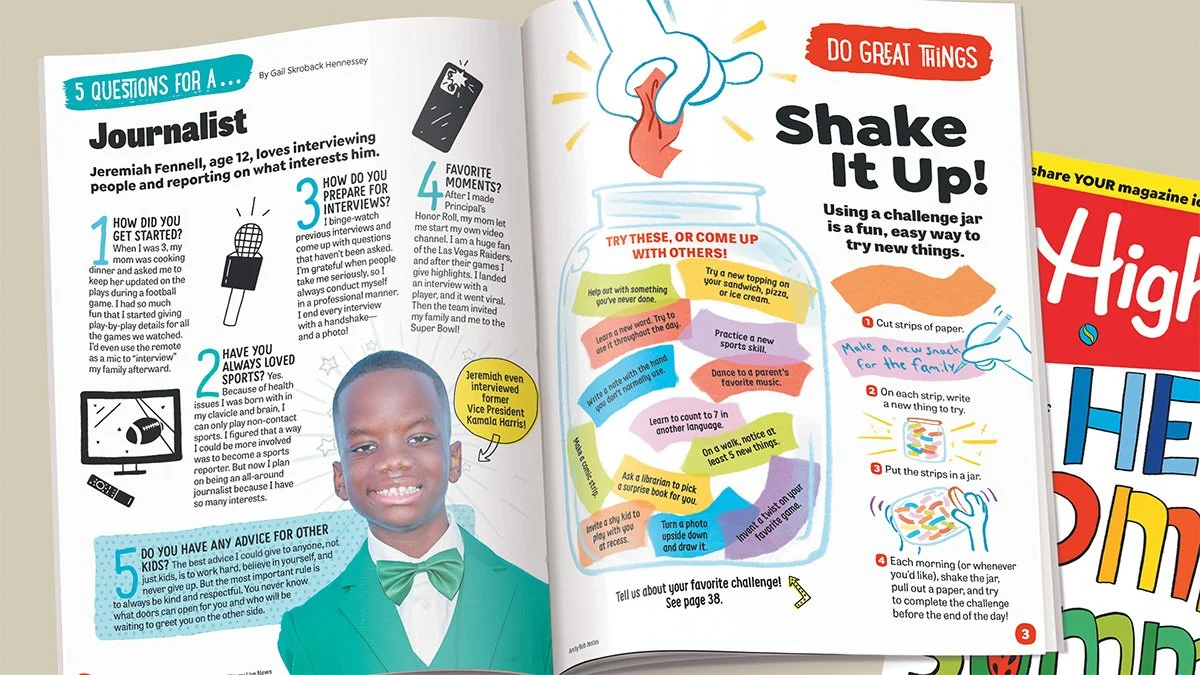
Children’s magazines often spotlight their readers—highlighting real kids, their interests, and their voices as part of the story. (Courtesy of Highlights for Children)
Editors and art directors also work to reflect their audiences through the characters, illustrations, and subjects that appear throughout the magazine. The representation may show up in small but meaningful ways: illustrating characters wearing masks during the time of the COVID-19 pandemic, depicting blended families in everyday scenes, or presenting a range of cultural traditions and experiences. After all, not every child sees snow in the winter or celebrates Christmas.
Taken together, these choices signal something important to young readers—that their experiences, families, and communities belong in the story.
For organizations working with youth, the takeaway extends beyond publishing. When programs, communications, and services reflect the real lives of the children they hope to reach, trust begins to form.
Preparation and responsiveness
Anyone who works in communications understands that success often depends on the balance of preparation and responsiveness. The same is true in children’s publishing.
Editors and designers work to anticipate the needs of their readers while also responding thoughtfully to the events shaping children’s lives. Sometimes that means speaking directly to young readers through stories or articles. Other times it involved speaking to caregivers through supplemental material—such as sidebars, guides, or online resources—that help adults support the child’s experience.
In practice, this requires careful planning. Most children’s magazines begin developing an issue at least six months in advance, even though content is meant to reflect the season and events happening when the magazine arrives in the reader's mailbox. That means teams are typically working on winter holidays in June or planning a Summer Olympics issue long before the medalists are known.
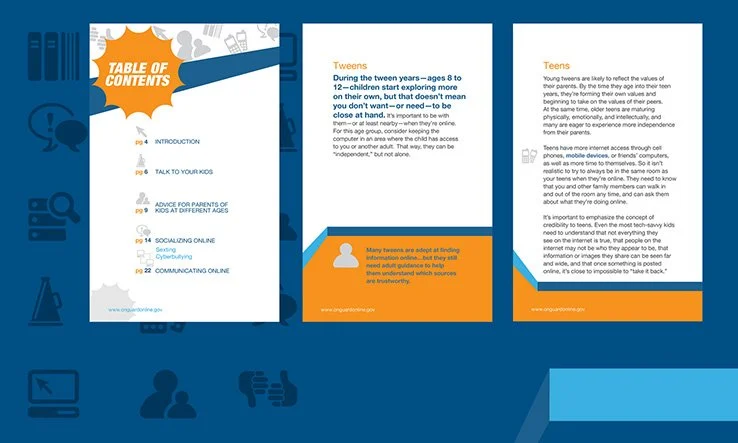
Public-facing materials can support both young people and caregivers—offering guidance that meets each audience where they are. (Courtesy of Ashleigh Axios)
To bridge the gap, editors rely on the shared experiences across childhood—preparing for holidays, anticipating big events, or feeling the excitement of watching an athlete break a record. They also draw on the range of learning styles and formats available to them, from puzzles to nonfiction and interviews to art projects. This approach recognizes that adults creating these magazines were once children themselves, allowing them to tap into those memories as they design content that supports and engages today’s youth.
By leaning into these moments, children’s publications signal something important to their readers: we understand what matters to you, and we are here for you.,
That sense of responsibility extends beyond the printed page. Since its founding in 1946, Highlights for Children has maintained a staff member dedicated to answering every piece of mail or email sent by readers—an enduring commitment to listening and responding to the children who write to them.
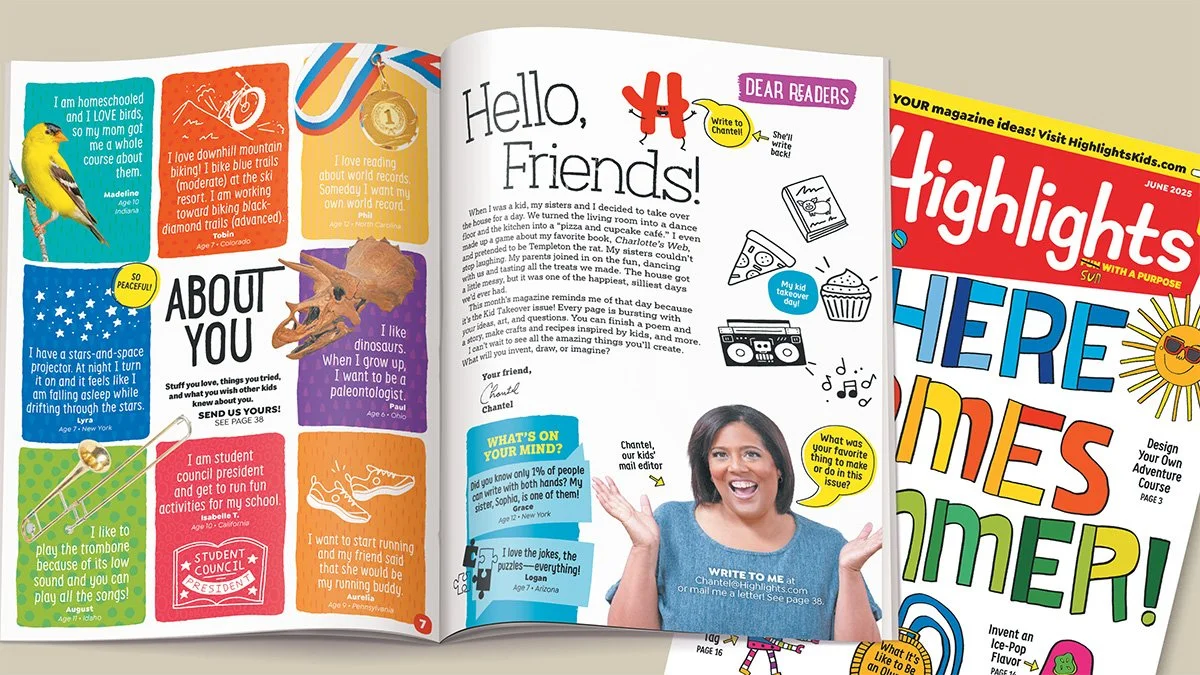
Longstanding reader engagement—from letters to featured contributions—helps build lasting relationships with young audiences. (Courtesy of Highlights for Children)
For youth-serving institutions, this balance—planning thoroughly while remaining responsive to real life—often determines whether engagement feels genuine or merely procedural.
Delivering on the promise
Magazines are circulating time capsules. While each issue offers the chance to create something new, children’s publishers also recognize they are producing something that may be saved, shared, and handed down for years to come.
Because of that, every issue must do two things at once: reflect the children of today while still feeling true to the identity of the brand. At Ranger Rick, we often talked about this balance as making each issue feel “new and different, yet comfortable and familiar.”
Fulfilling this promise creates a feedback loop that connects one generation’s early childhood experiences to a broader story that unfolds over time. When children recognize themselves in the pages—and return issue after issue—magazines build a lasting presence across generations.
Magazines also carry a certain humanness. As the world changes and children grow, the content must evolve with them. Not everything published decades ago will feel appropriate today. But the publications that truly understand their readers remain open to change while staying grounded in their core purpose.
For organizations that serve young people, the same principle applies: trust is built slowly, through consistency, care, and a willingness to evolve alongside the communities being served.
And that is the promise at the heart of children’s publishing:
Dear Reader, This belongs to you.
Related blog posts
Creativity is not a department by Maribeth Kradel-Weitzel
Top illustration by Spring 2026 intern, Haimeng Ge.
Two images courtesy of Highlights for Children.
—
What would this look like in your context?
We collaborate with public-serving organizations to turn these ideas into practice.