One year in service
Public-centered design in 2025
Public Servants was founded in January 2025 with a clear belief: design that shapes public systems carries responsibility to trust, access, and democratic integrity.
We spent the first part of the year building quietly. Working alongside public teams before speaking loudly about our work shaped how everything unfolded next.
As a new year begins, we took time to reflect on what our first year actually looked like.
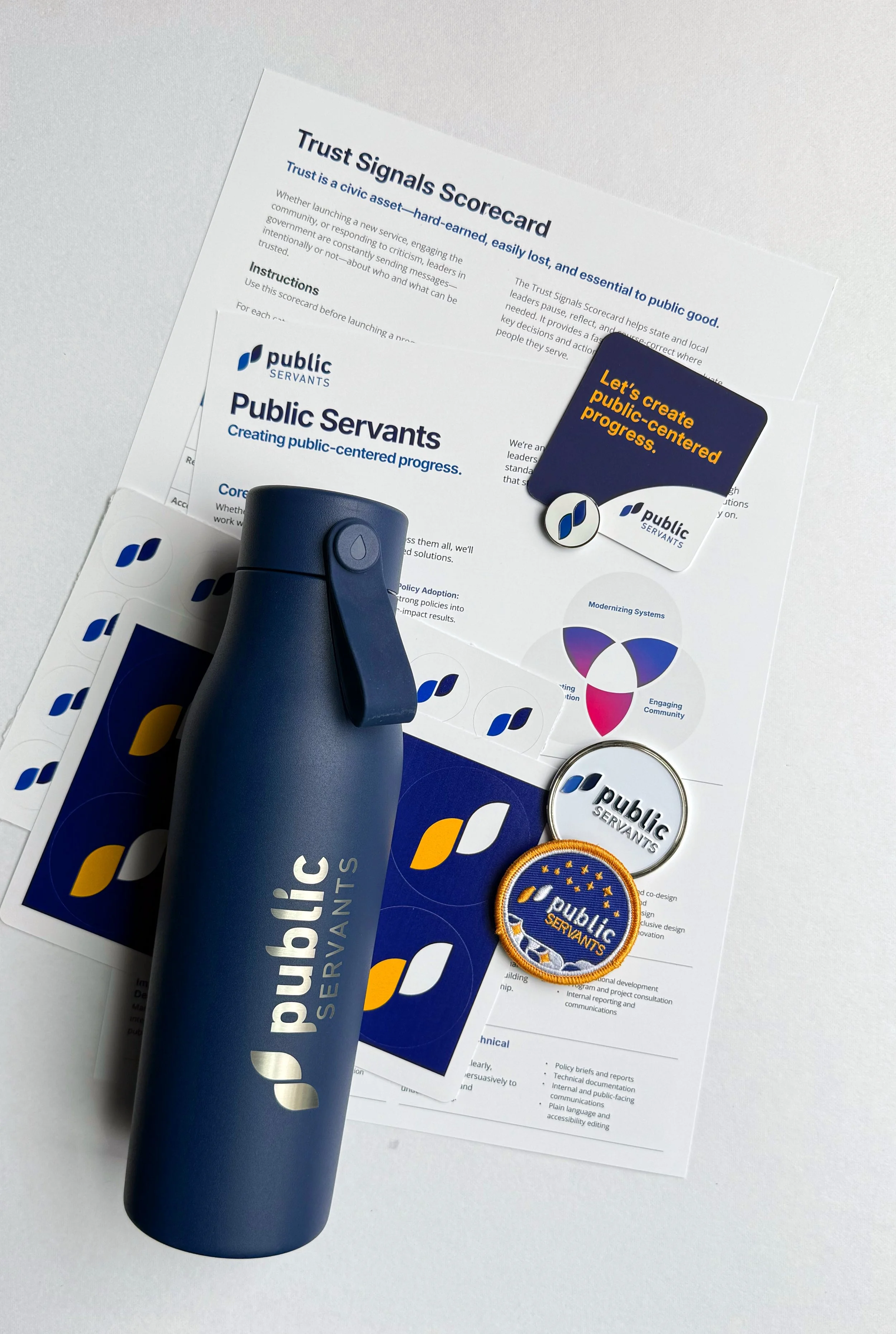
Tools and artifacts from Public Servants’ first year of practice.
What we focused on in 2025
Working alongside public teams
“Public Servants helped us zoom out at a critical time—to pause, reflect on what was working and what wasn’t, and realign around creating the best possible experience for people in Minnesota.”
–Abigail Fisher, Digital Services Unit
In 2025, we partnered with mission-driven organizations, including state and city governments across the United States. We supported teams through training, service design, and moments that required clarity and alignment. This work often took place during periods of transition, growth, or pressure.
We also launched workshop series designed to strengthen collaboration, clarify roles, and help teams lead complex work with confidence.
Most requested services heading into 2026:
Service design; content strategy and design; product strategy; team management and organization; visual branding and brand positioning.
Investing in the civic design ecosystem
We sponsored the Service to the Citizen Awards and the DotGov Design Conference, supporting spaces that recognize public service, care, and practical innovation. Along the way, our public-servants-supporting swag became a small but meaningful signal. It showed up as a quiet expression of shared values in rooms where this work matters.
Advancing the conversation on democracy and design
Our founder and CEO was featured in The New York Times, CNN, and international media discussing the role of design in democracy, governance, and public trust. These moments reflected a growing recognition that design decisions inside government carry real civic consequences.
Building durable tools and language
Beyond client work, we published 52 blog posts exploring public-centered design in practice. Two original frameworks—the Trust Signals Scorecard and the Experience Tapestry—were especially well received, offering teams shared language to assess trust and understand how people experience complex systems.
Stewardship behind the scenes
We also invested heavily in foundations. This included developing internal tools like our Fit Snapshot and putting workforce, IT, and operational systems in place so growth can happen with care, clarity, and sustainability.
Much of our January 2026 work is already underway, and we’re looking forward to sharing more as the year unfolds.
A growing national community
Public Servants now connects with more than 1,000 followers across dozens of U.S. states and territories, with early international reach. This community includes public servants, designers, researchers, policymakers, and educators who are committed to building systems that work better for the public, together.
A few lessons we’ll carry forward
Public teams asked for clarity, not novelty.
Frameworks landed most strongly when they named what people were already experiencing, turning implicit tension into shared understanding and action.
Generosity of ideas, credit, and care tended to come back multiplied.
Looking ahead to 2026
We’re entering 2026 with momentum already in motion. January work is includes city training engagements, creative branding projects, and generative research efforts. Building on a successful trial summer 2025 internship, we’re launching a Spring 2026 program to continue investing in the next generation of public-centered practitioners.
We’ll keep publishing, refining our tools, and supporting public teams as they navigate complex challenges with integrity and courage.
With gratitude
To the public servants who trusted us with their work, the partners who collaborated generously, and the readers who engaged thoughtfully, thank you.
Public-centered design is collective work. It’s shaped over time and sustained by care. We’re grateful to be building it together, and to continuing the work ahead.